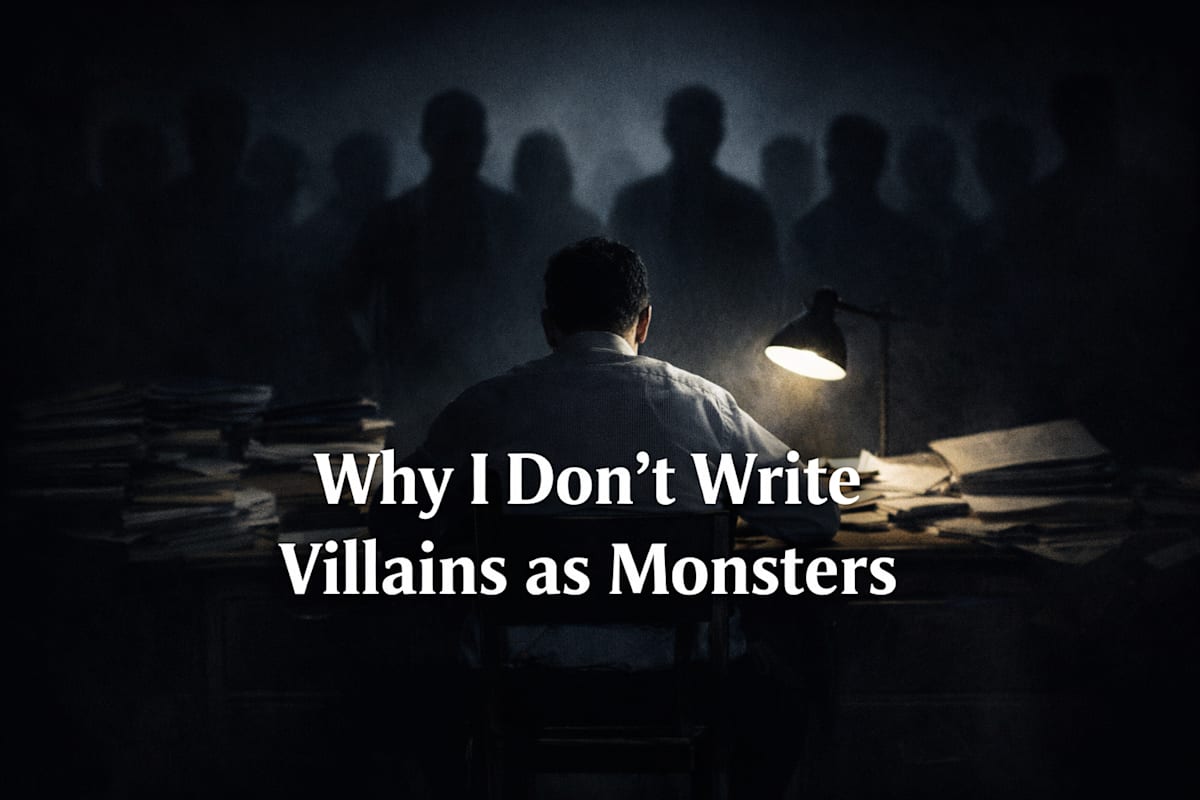
Monsters are convenient.
They concentrate blame. They allow harm to be externalised, contained, and ultimately destroyed. When a monster is defeated, the story ends. The system that enabled it is rarely examined, because the threat has been removed.
Real harm doesn’t work that way.
In the real world, damage is rarely inflicted by individuals who believe themselves to be evil. It is inflicted by people who believe they are justified, protected, or simply following the correct process. The most destructive actions are often framed as reasonable responses to complex situations.
This is why I avoid writing villains as monsters.
Monsters imply exception. They reassure the reader that what occurred was abnormal, that the world can return to balance once the aberration is removed. That reassurance is comforting—but it is also dishonest.
The stories that interest me are not about aberrations. They are about patterns.
They examine how ordinary decision-making produces extraordinary harm when filtered through institutions that prioritise stability over accountability. They focus on the spaces where responsibility thins out, where action is delayed because delay feels safer than intervention.
In these stories, no one wakes up intending to destroy lives. They wake up intending to do their job well.
That intention is rarely interrogated.
By removing the monster, the narrative shifts its attention to something less satisfying but more accurate: the conditions that allow harm to persist without resistance. The absence of a villain forces the reader to sit with ambiguity—to recognise that outcomes can be catastrophic even when everyone involved behaved “appropriately.”
This discomfort is deliberate.
Because once the monster is gone, the question remains:
If no one is evil… why does this keep happening?